
When Daniel started packing for his long-distance move, he thought he knew what he was doing. He’d moved before—plenty of times, actually. Boxes, tape, labels. How different could it be?
But this move wasn’t across town. It wasn’t even within the same province. His belongings would be traveling thousands of kilometres, crossing provinces, highways, weather zones, and long stretches of road. Somewhere between wrapping his first lamp and sealing his tenth box, he realized something important:
Packing for a long-distance move isn’t about speed. It’s about protection.
Start by Packing Less Than You Think You Need
The first real packing decision Daniel made had nothing to do with boxes. It was about letting go.
Long-distance moves are priced partly by volume. Every item you pack needs space, handling, and protection for days on the road. He started by sorting his belongings honestly. Items he hadn’t used in years didn’t need to make the journey.
Clothes that no longer fit, extra kitchenware, outdated electronics—these were easier to part with once he thought about carrying them across the country. Decluttering early didn’t just save money. It made packing calmer and more organized.
Use Strong Materials—Not What’s Convenient
Daniel’s next mistake was using whatever boxes he could find. Grocery boxes, old storage bins, mismatched cartons. They worked fine for short moves. They didn’t work for long-distance ones.
Extended transport means vibration, pressure, and shifting. Thin boxes collapse. Weak tape fails. That’s when he switched to reinforced moving boxes and proper packing tape.
Heavy items went into smaller boxes. Lighter items filled larger ones. Nothing was overstuffed. Every box was built to stay intact through days of motion, not just a short drive.
Wrap Everything Like It Will Be Touched More Than Once
In long-distance moves, items are handled carefully—but they are handled. Loading, unloading, adjusting weight distribution, and securing loads all involve movement.
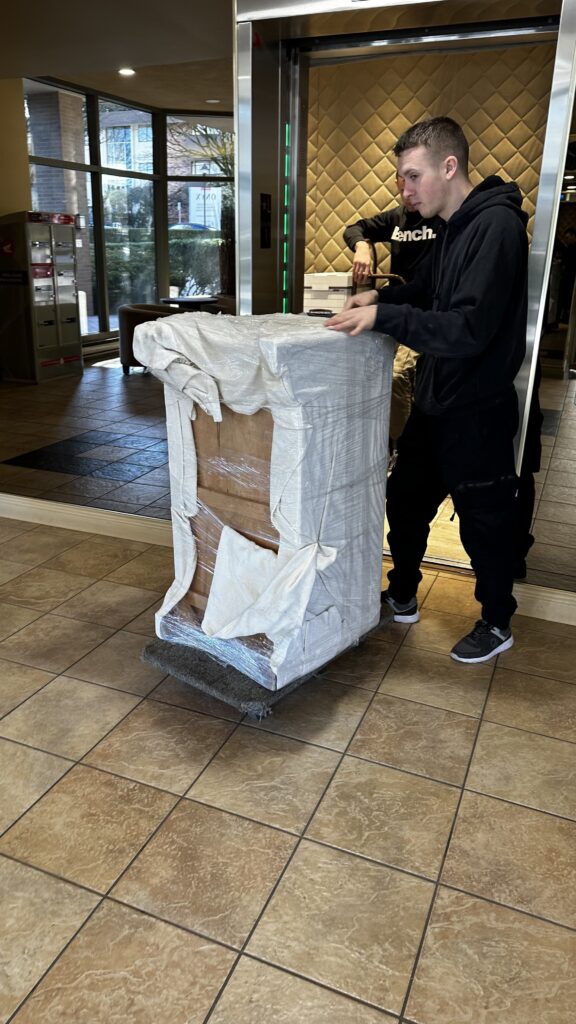
Daniel learned to wrap furniture completely, not just at the corners. Moving blankets weren’t optional. They were essential. Table legs were padded. Drawers were secured. Mattresses were covered.
For fragile items, wrapping once wasn’t enough. Plates were wrapped individually. Glassware was padded on all sides. Empty space inside boxes was filled so nothing could shift.
The goal wasn’t just to stop breakage. It was to stop movement.
Label for Protection, Not Just Organization
At first, Daniel labeled boxes by room. Kitchen. Bedroom. Office. It seemed logical.
Then he realized labels serve another purpose: communication. Boxes marked “fragile” weren’t just warnings—they guided how items were stacked, where they were placed, and how they were handled.
He added notes like “this side up” and “do not stack.” He marked which boxes contained essentials he’d need immediately after delivery. Clear labeling helped everyone involved protect his belongings more effectively.
Don’t Let Electronics Pack Themselves
Electronics worried Daniel the most. TVs, computers, monitors—they don’t show damage right away.
Whenever possible, he packed electronics in their original boxes. When that wasn’t an option, he used custom padding and kept cords labeled and separated.
He also learned something important: electronics should be packed last and unpacked after they’ve adjusted to room temperature. Condensation from temperature changes can cause damage if devices are powered on too quickly.
Packing electronics properly meant thinking beyond the box.
Furniture Needs Disassembly—Even When It Feels Unnecessary
Daniel almost left his bed frame assembled. It seemed sturdy enough.
But long-distance transport puts stress on joints and fasteners. Disassembling furniture reduced pressure points and made items easier to wrap and secure.
He kept all hardware in labeled bags taped to the corresponding furniture. Nothing got lost. Nothing rattled loose. Reassembly at the destination was easier than expected.
Sometimes taking things apart is what keeps them intact.
Keep Essentials With You—Always
One of the smartest packing decisions Daniel made had nothing to do with the truck.
He packed a separate essentials bag. Clothing for a few days. Toiletries. Important documents. Chargers. Medications. Anything he couldn’t afford to wait for.
Long-distance moves operate on delivery windows. Even when everything goes smoothly, there’s a waiting period. Having essentials on hand made that time comfortable instead of stressful.
When Professional Packing Makes Sense
As the move got closer, Daniel realized how much time and attention packing required. For fragile items and large furniture, professional packing services made sense.
Professionals pack differently. They anticipate movement. They know pressure points. They use techniques designed specifically for long-distance transport.
Using professional help wasn’t about convenience—it was about reducing risk.
The Real Goal of Packing for Long-Distance Moves
When Daniel finally unpacked weeks later, everything arrived intact. Nothing scratched. Nothing broken. Nothing missing.
He realized then that good packing doesn’t just protect belongings. It protects peace of mind.
Packing for a long-distance move isn’t about getting things into boxes. It’s about preparing them for a journey. When items are packed thoughtfully, the distance feels less intimidating—and the arrival feels that much better.