
An interprovincial move from Vancouver to Red Deer is not priced casually. It involves regulated transport, long-haul planning, fuel forecasting, and risk management across provinces and mountain terrain. Below is a deeper, operational-level breakdown of what truly determines cost—written so you understand why numbers look the way they do, not just what they are.
1. Distance, Route Planning, and Commercial Transport Reality
The move covers roughly 850–900 km, but movers do not calculate pricing based on mileage alone.
Professional carriers must factor in:
- Mandatory commercial routes (not shortest driving routes)
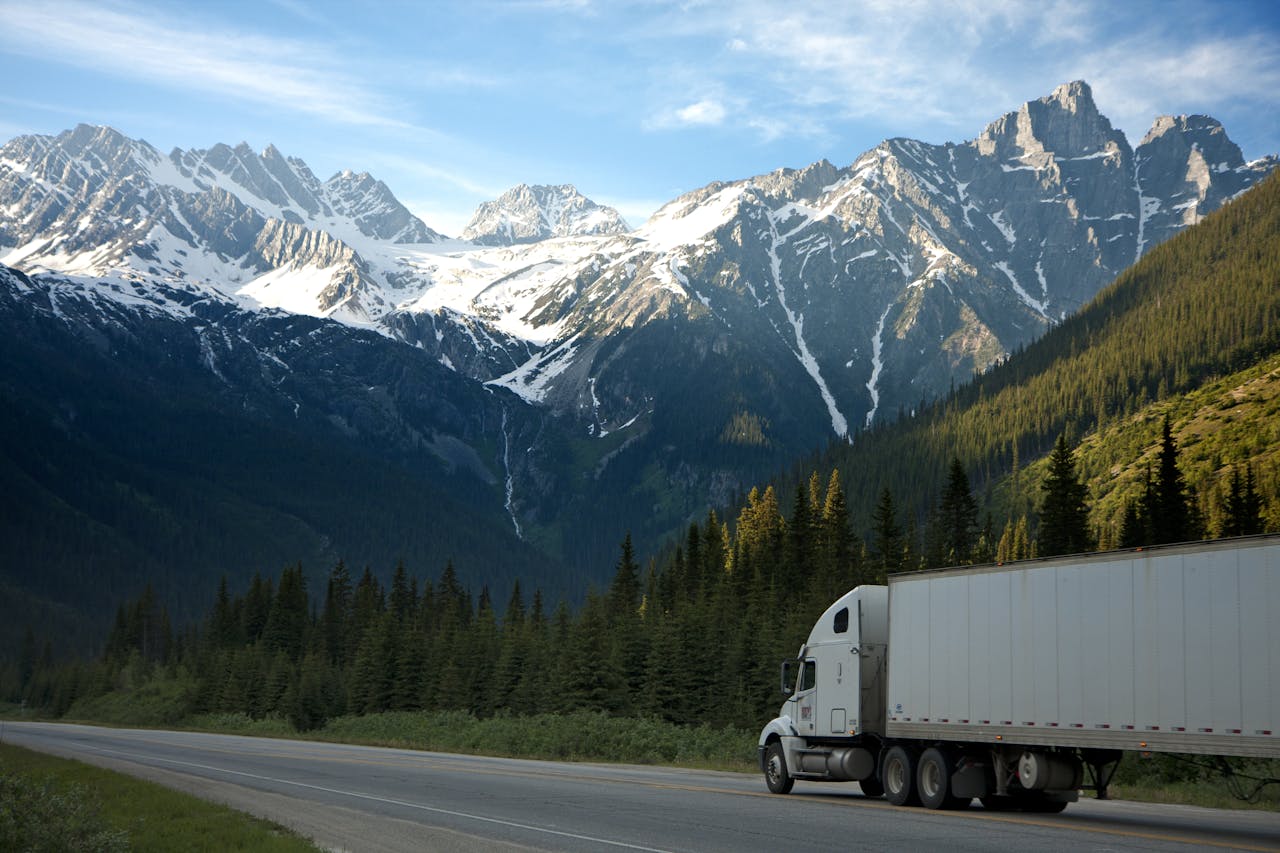
- Mountain grades that increase fuel consumption and brake wear
- Driver hours-of-service limits
- Rest stops and compliance checks
- Seasonal weather risk (snow, ice, wind corridors)
This makes BC–Alberta moves inherently more expensive than same-distance prairie routes.
2. Shipment Weight vs. Volume (How Movers Actually Measure)
Long-distance pricing is based on billable weight, which is calculated from either:
- Actual weight (scaled on certified truck scales), or
- Cubic footage converted to weight using industry standards
What drives billable weight upward:
- Dense items (books, tools, gym equipment)
- Solid wood or antique furniture
- Appliances and large electronics
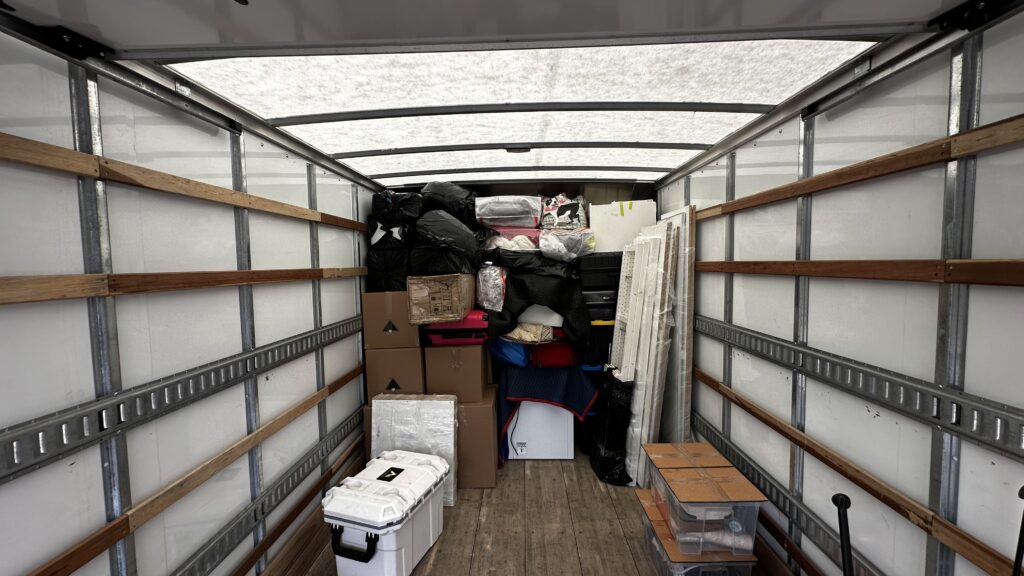
- Poor packing density (air gaps, oversized boxes)
Even small reductions in shipment size can have a measurable impact on cost.
3. Packing Method and Material Usage
Packing is a cost factor many people underestimate.
Costs increase based on:
- Number of cartons required
- Specialty materials (wardrobe boxes, dish packs, mattress bags)
- Fragile-item wrapping (art, glass, mirrors, TVs)
- Labor time for professional packing crews
Professional packing adds cost upfront but:
- Reduces damage risk
- Simplifies claims if something goes wrong
- Speeds up loading and unloading
DIY packing lowers initial cost but shifts risk to the customer.
4. Labor Structure: Origin vs Destination
Long-distance moves involve two labor phases:
- Loading labor in Vancouver
- Unloading labor in Red Deer
Each phase is affected by:
- Stair carries or walk-ups
- Elevator wait times
- Distance from truck to residence
- Size and weight of items
Labor is priced separately from transport and scales with complexity, not just time.
5. Fuel, Surcharges, and Operating Costs Factors
Fuel is not a flat-rate expense on interprovincial moves.
Professional quotes account for:
- Fuel price volatility
- Mountain fuel burn rates
- Idle time during weather or inspections
- Equipment wear (tires, brakes, suspension)
Some movers include fuel in the base rate; others itemize it. Either approach is valid—but it should be transparent.
6. Timing, Seasonality, and Capacity Pressure
Moving costs fluctuate based on demand, not convenience.
Higher-cost periods include:
- May through September
- Month-end lease cycles
- Weekends and statutory holidays
Lower-cost windows:
- Mid-week moves
- Mid-month scheduling
- Late fall and winter (with weather considerations)
Flexibility is one of the few leverage points customers control.
7. Insurance, Valuation, and Declared Value
Basic carrier liability is minimal and weight-based.
Most long-distance customers upgrade to:
- Declared value coverage
- Full replacement valuation
- Specialty item protection
Cost is typically calculated as a percentage of declared shipment value. This is not an optional add-on if financial protection matters.
8. Storage-in-Transit (SIT) Costs
If your Red Deer residence is not ready on delivery day, storage becomes part of the move.
Storage costs include:
- Warehouse handling (in and out)
- Secure storage space
- Storage duration
- Re-delivery coordination
Even short-term storage adds measurable cost and should be planned, not assumed.
9. Specialty Items and Non-Standard Cargo
Certain items require specialized handling and separate pricing:
- Pianos and large musical instruments
- Safes and vaults
- Pool tables
- Large antiques or fragile heirlooms
- Motorized or mechanical equipment
These items increase labor time, equipment requirements, and liability exposure.
10. Taxes and Interprovincial Billing
Interprovincial moves are subject to federal tax rules, not provincial retail tax structures.
Expect:
- GST applied to services
- Clearly itemized invoices
- Written estimates compliant with carrier regulations
If taxes or fees are vague or missing, that’s a red flag.
What Does Not Affect Cost
Despite common assumptions, pricing is not influenced by:
- Your income or profession
- Whether you’re buying or renting
- Emotional urgency
- How stressful the move feels
Pricing is operational, not personal.
Final Perspective
A Vancouver to Red Deer move is a logistical project, not a simple delivery. Every legitimate cost is tied to:
- Distance and terrain
- Shipment size and density
- Labor complexity
- Timing and demand
- Risk management and liability
When a mover explains these factors clearly and documents them in writing, pricing is predictable. When they don’t, surprises are almost guaranteed.