

Would you trust your most vulnerable family member to a cargo hold, or is a 4,000-kilometre drive across the Prairies actually the more stressful choice? Learning how to move with pets across canada is often the most daunting part of a long-distance relocation. You want to ensure your cat or dog arrives at your new home healthy and relaxed, but the conflicting advice about airline safety and provincial health certificates can feel overwhelming. It’s natural to worry about their comfort when you’re crossing several time zones and changing environments.
We understand that your pets are family, and their safety requires the same level of precision as any other part of your move. This guide will help you master the logistics of a long-distance relocation with expert-backed strategies for a safe, predictable journey. We’ll help you decide between flying and driving based on the latest 2026 airline policies, provide a comprehensive packing list for your pet, and share proven methods to minimize their anxiety during the transition. By the time you reach your new province, you’ll have the tools to ensure your pet’s arrival is as smooth as the delivery of your household goods.
Key Takeaways
- Start preparations at least six weeks in advance by securing health certificates and updating microchip information for a seamless provincial transition.
- Learn how to move with pets across canada safely by evaluating 2026 airline policies against the logistical demands of a multi-day cross-country drive.
- Leverage guaranteed delivery dates for your household goods to coordinate your pet’s arrival and avoid the stress of extended stays in temporary accommodations.
- Pack a dedicated ‘Pet Passport’ and a five-day surplus of familiar rations to maintain your animal’s routine and health throughout the relocation.
- Minimize transition anxiety by pet-proofing your new residence and establishing a familiar ‘safe zone’ immediately upon arrival.
Preparing Your Pet for a Long-Distance Move Across Canada
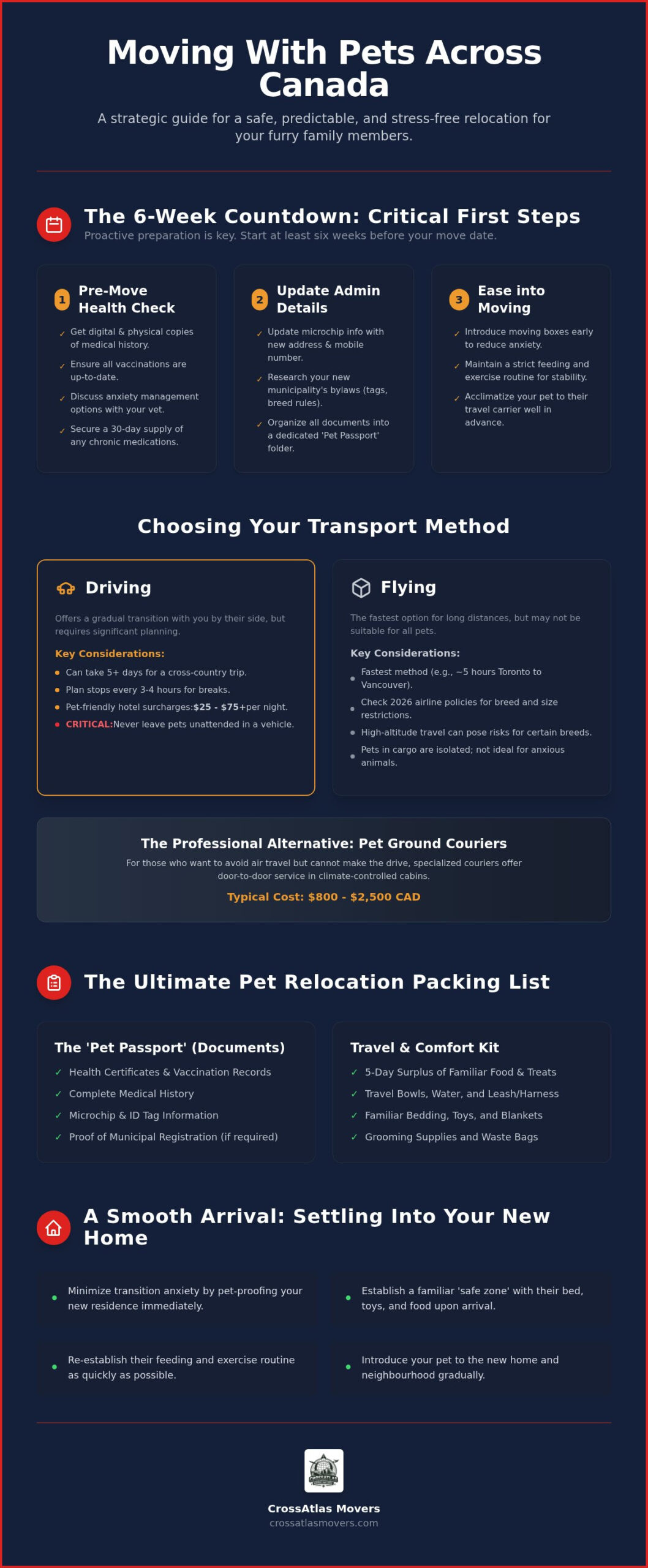
Moving house is a significant disruption for animals who thrive on predictability and familiar scents. Learning how to move with pets across canada requires a proactive approach that begins long before the moving trucks arrive at your door. Success starts at least six weeks before your move date. This timeline provides enough room to handle medical requirements and behavioural adjustments without the pressure of a looming deadline.
The Pre-Move Health Check
Your first priority is a comprehensive veterinary consultation. Request a digital and physical copy of your pet’s complete medical history, including up-to-date vaccination certificates. If you’re crossing provincial borders, these records are your primary proof of health and are essential if you need to access emergency care during transit. You should also discuss anxiety management with your vet. Many owners find success with pheromone sprays or mild sedatives for the actual travel days. Ensure you secure at least a 30-day supply of any chronic medications; finding a new clinic and transferring prescriptions in a new city often takes longer than expected. General pet travel guidelines emphasize that a healthy animal is a resilient traveller.
This is also the time to manage administrative details. Update your pet’s microchip information with your new address and a current mobile number. If your new municipality requires specific registration tags or has breed-specific bylaws, research those requirements now. It’s much easier to have these documents organized in a dedicated folder than to scramble during your first week in a new province.
Acclimatizing to the Moving Environment
Animals sense the shift in home energy long before the first box is taped shut. You can reduce “packing anxiety” by introducing moving supplies into your living space early. Let your cat or dog explore the boxes so they become a neutral part of the environment. Maintaining a strict feeding and exercise routine is vital during this period. Consistent schedules provide a sense of security when their physical surroundings are changing.
To keep the atmosphere calm, consider using professional packing services. When experts handle the logistics, the process is completed in a fraction of the time. This minimizes the duration your home is in disarray and allows you to remain focused on your pet’s emotional needs rather than the chaos of taping boxes.
Finally, normalize the travel gear. If you’re flying, your pet must be comfortable in their carrier for several hours. Start with short sessions at home, rewarding them for staying inside. If you’re driving, use this time to research pet-friendly hotels along your route. Knowing exactly where you’ll stop each night removes the uncertainty of finding accommodation in unfamiliar territory. Understanding how to move with pets across canada involves managing these small details so they don’t become large problems on the road.
Choosing the Right Transport Method: Driving vs. Flying
The decision of how to move with pets across canada often comes down to a trade-off between time and control. While a flight from Toronto to Vancouver takes roughly five hours, a drive can easily span five days or more. You must assess your pet’s physical health for high-altitude travel, as certain breeds or older animals may face respiratory risks in pressurized environments. If your pet has a nervous temperament, the constant presence of their owner in a car may be preferable to the isolation of a cargo hold.
If you choose to drive, calculate the true cost beyond the fuel tank. Factor in pet-friendly hotel surcharges, which often range from $25 to $75 per night, and the additional meals required for a week-long trek. For those who cannot commit to the drive but want to avoid air travel, specialized pet ground couriers offer a middle ground. These professionals provide door-to-door service in climate-controlled cabins, though costs for long-haul transport typically range from $800 to $2,500 CAD depending on the distance and service level.
Driving Across Canada with Pets
Road trips allow for a gradual transition, but they require a methodical schedule. Plan stops every three to four hours for exercise and hydration to keep your pet’s stress levels low. Safety is paramount; never leave a pet unattended in a vehicle, as interior temperatures can reach dangerous levels in minutes. Organize a dedicated travel bag with familiar toys and bedding to maintain a constant sense of home while you cross provincial lines. Using residential moving services for your household goods allows you to focus entirely on these driving logistics rather than worrying about a packed trailer.
Navigating Air Travel for Pets
Air travel is the fastest option, but it requires strict adherence to 2026 airline policies. Major carriers like Air Canada and WestJet have specific weight limits for in-cabin travel, typically capped at 10 kg including the carrier. Always book direct flights to avoid the risks associated with layovers or transfers. According to the American Veterinary Medical Association, proper crate ventilation and sizing are critical for safety, especially if your pet must travel as checked baggage. Ensure your carrier is IATA-approved and labelled with your contact information and the pet’s name.
Timing is the final piece of the puzzle. You should coordinate your flight with your guaranteed delivery date movers. This coordination ensures you arrive at your new residence just before or at the same time as your belongings. This allows you to set up a familiar space for your pet immediately, reducing the time they spend in an empty house or a temporary hotel room.
Essential Tips for Moving Across Canada with Pets
Executing a relocation across several provinces requires more than just a crate and a ticket. Understanding how to move with pets across canada means managing the small details that often get lost in the shuffle of boxes and paperwork. One of the most effective ways to maintain control is to create a physical ‘Pet Passport’ folder. While not a legal requirement for domestic travel, this folder should house your pet’s vaccination records, recent photos, and a printed summary of their medical history. Having these documents in a physical format ensures you can access them even if your phone battery dies or you lose cellular service while driving through the Rockies.
Safety also extends to your destination. Before you leave your current home, research the nearest 24-hour emergency veterinary clinic in your new community. Save their address and phone number in your contacts immediately. You should also update your pet’s collar with a new tag featuring your new address and a current mobile number. To ensure no detail is overlooked, consult a moving to another province checklist to sync your pet-related tasks with your human ones.
Inter-Provincial Regulations
While there are no federal border checks for domestic pet travel, provincial requirements can vary. Most provinces require a valid rabies vaccination for all cats and dogs, and you should carry proof of this at all times. It’s also vital to check for breed-specific legislation (BSL) in your destination city or province, as certain breeds face restrictions in areas like Ontario or specific municipalities in Quebec. Staying informed on local bylaws ensures your pet’s residency is as legal and secure as your own in 2026.
Managing Move-Day Stress
The day the truck arrives is often the most stressful period for an animal. To manage this, designate a quiet, secured room where your pet can stay while movers load your belongings. Place their bed, water, and a few toys inside, and use a ‘do not disturb’ sign on the door to alert the moving crew. This prevents accidental escapes through open doors and keeps the animal away from the heavy lifting and noise. Ensure your pet is the last thing to leave the old house and the first to enter the new one to provide them with a sense of continuity and security throughout the transition.
The Ultimate Pet Relocation Packing List
Packing for a cross-country move requires a different strategy than a weekend trip. When you’re learning how to move with pets across canada, your packing list is your primary tool for maintaining their health and comfort over thousands of kilometres. A well-prepared travel kit prevents unnecessary stress and ensures you aren’t searching for specialized supplies in an unfamiliar town. You should organize these items into a dedicated ‘go-bag’ that stays with you, rather than being packed with your household goods.
Nutrition and hydration are the foundations of a successful journey. Do not rely on finding your pet’s specific brand at a rest stop in the Prairies. Pack enough food for the entire journey plus an extra five days of rations. Sudden changes in diet can cause digestive upset, which is difficult to manage while travelling. Similarly, pack a three-day supply of familiar water in collapsible bowls. Different mineral contents in municipal water across provinces can sometimes discourage pets from drinking, leading to dehydration. To manage anxiety, include calming aids like weighted vests or pheromone collars. If your veterinarian has prescribed sedatives, ensure they are easily accessible in your carry-on or glove box. Finally, include a pet-specific first aid kit containing antiseptic wipes, bandages, and tweezers for removing ticks after walks in rural areas.
Sanitation and Comfort
Maintaining hygiene in a car or crate is a logistical challenge that requires specific supplies. Cats require a portable litter box with familiar litter, while dogs need an ample supply of waste bags. Pack a roll of paper towels and a bottle of enzyme cleaner to handle any accidents in hotels or carriers immediately. To provide a sense of security, bring bedding that hasn’t been washed recently. The familiar scent of home helps anchor your pet in an unfamiliar hotel room or cargo hold. This sense of continuity is vital when their physical environment is changing so rapidly.
Safety Gear
The risk of a pet escaping is highest during transitions at rest stops or airports. Use a heavy-duty harness and a non-retractable leash for maximum control during walks. Attach a GPS tracker, such as an AirTag or a specialized pet GPS, to their collar to provide real-time location data. You should also keep both digital and printed photos of your pet on hand. These photos should clearly show any unique markings to help others identify them if they happen to wander off in a new community. By utilizing long distance moving services for your furniture and boxes, you can dedicate your full attention to managing these safety protocols and keeping your pet secure throughout the trip.
Settling into Your New Canadian Home
The journey across the country is complete, but the transition for your pet is only just beginning. Learning how to move with pets across canada concludes with a critical decompression phase once you reach your destination. While you may be eager to unpack every box, your pet requires a structured introduction to their new environment to prevent long-term anxiety. A successful transition mirrors the methodical approach found in a vancouver to toronto moving guide, where the focus shifts from the logistics of transport to the psychology of settling in.
Before you release your animal from their carrier, perform a final pet-proofing sweep of the entire residence. Check for hazards that may have been overlooked, such as loose electrical wires, open floor vents, or cleaning chemicals left in cupboards by previous residents. Once the space is secure, establish a ‘safe zone’ immediately. This should be a quiet room or corner where you place their familiar bedding, toys, and water bowls. By surrounding them with known scents before they explore the rest of the house, you provide an emotional anchor in an unfamiliar landscape. Gradually introduce them to the rest of the home one room at a time to avoid sensory overload.
The First 48 Hours
The initial two days in a new province are dedicated to rebuilding a sense of security. You should stick to your pet’s old feeding and walk schedule as closely as possible, even if your own routine is still in flux. Consistency is the most effective tool for lowering an animal’s heart rate after a long-distance move. Spend extra time with your pet during this period to reinforce their safety through your presence. It’s vital to monitor them for signs of significant stress, such as a total lack of appetite, prolonged hiding, or excessive vocalization. While some hesitation is normal, persistent distress may require a consultation with a local professional.
Long-Term Adjustment
Transitioning your pet’s medical care is a priority that should be handled within the first two weeks. Register with a new local veterinarian and provide them with the ‘Pet Passport’ folder you maintained during the move. This ensures there is no gap in their health records if an emergency arises. Once your pet seems comfortable indoors, begin exploring local pet-friendly parks and trails to build a new outdoor routine. Be patient with the process. It often takes several weeks for an animal to fully realize they are ‘home’ and to stop reacting to the new sounds and smells of the neighbourhood. By maintaining a calm, supportive environment, you help them trade the stress of the road for the comfort of their new Canadian community.
Start Your New Journey with Confidence
Successful relocation requires balancing the complex needs of your family with the physical comfort of your animals. By prioritizing early veterinary visits and maintaining a consistent routine, you create a foundation of safety that lasts from the first packed box to the final walk in your new neighbourhood. Mastering how to move with pets across canada is ultimately about removing the variables that cause stress; this allows you to focus on the emotional transition rather than the logistical hurdles.
Coordinating your schedule is easier when you have a dependable partner handling the heavy lifting. We provide the reliability of a family-owned operation with the precision of guaranteed delivery dates, ensuring your household goods arrive exactly when you expect them. With no hidden fees and a commitment to transparent, flat-rate pricing, we help you manage your moving budget effectively so you can prioritize your pet’s specific travel requirements.
Get a flat-rate quote for your long-distance move so you can focus on your pet’s journey and enjoy the peace of mind that comes with methodical, professional care. Your new home is waiting, and we’re here to ensure you and your pets arrive ready to begin your next chapter together.
Frequently Asked Questions
Is it better to fly or drive my dog across Canada?
The best choice depends on your dog’s health and anxiety levels. Flying is the most efficient option for coast-to-coast moves; it reduces the total travel time from days to hours. However, driving is often preferable for senior dogs or those with respiratory issues, as it allows you to monitor their condition and provide frequent exercise breaks. You should evaluate your pet’s temperament before deciding on a method.
How much does it cost to ship a pet across Canada in 2026?
Costs vary significantly based on the level of service you require. In 2026, major airlines like Air Canada and WestJet charge between $50 and $60 CAD for pets travelling in the cabin. If you choose professional ground transportation for a long-haul route, prices typically range from $800 to $2,500 CAD. Budgeting for these expenses is a key part of learning how to move with pets across canada successfully.
Do I need a health certificate to move my pet between provinces?
You do not need a federal permit for inter-provincial travel, but most airlines require a domestic health certificate. These documents are issued by a licensed veterinarian and typically cost between $50 and $200 CAD. The certificate confirms your pet is fit for travel and up to date on their rabies vaccinations. It’s a vital document for ensuring a smooth transition during air travel or ground transport.
Can moving companies transport pets in their trucks?
Professional moving companies do not transport live animals in their trailers due to safety regulations and climate control limitations. At CrossAtlas Movers, we focus on providing professional packing and residential moving services for your belongings. We offer guaranteed delivery dates so you can coordinate your pet’s separate travel to coincide with the arrival of your furniture. This ensures your pet spends minimal time in temporary housing.
How can I keep my cat calm during a long-distance move?
Maintaining a calm environment starts with familiar scents and proper crate training. Use synthetic pheromone sprays in their carrier and include a piece of unwashed clothing that smells like you. This provides an emotional anchor during the chaos of the move. If your cat is particularly prone to stress, discuss the use of mild sedatives or calming supplements with your veterinarian at least a month before your departure.
What are the best pet-friendly hotel chains in Canada for a cross-country move?
Chains like Sandman Hotel Group, Fairmont, and Holiday Inn are well-regarded for their pet-friendly policies across the country. Many of these locations offer dedicated rooms for travellers with animals; however, fees and weight limits can vary by location. Always call ahead to confirm availability and current surcharges, which often range from $25 to $75 per night. Booking in advance ensures you aren’t left searching for accommodation at the end of a long driving day.
Are there breed-specific bans I should know about when moving to a new province?
Yes, breed-specific legislation exists in several parts of the country. Ontario has long-standing restrictions on pit bull-type dogs, and various municipalities in Quebec and other provinces have their own specific bylaws. Researching these local regulations is an essential step in how to move with pets across canada. Confirming the legality of your pet’s breed in your new city prevents heartbreaking legal complications after you arrive.
What happens if my pet gets sick during the journey?
Preparation is the best defence against illness on the road. Identify 24-hour emergency veterinary clinics in major cities along your route and save their contact information before you leave. Carry your ‘Pet Passport’ folder with complete medical records so any new veterinarian can quickly understand your pet’s history. If you notice signs of distress like persistent vomiting or lethargy, stop at the nearest clinic rather than waiting until you reach your destination.