

The lowest estimate you receive for an interprovincial move is often the most expensive one you’ll ever pay. When you’re planning a relocation across the country, a breakdown of long distance moving costs Canada involves more than just a simple distance calculation. Many homeowners feel a deep sense of unease when they realize their final bill depends on a weight scale they’ll never see. It’s a common and valid fear that your life’s possessions could be held for extra fees that weren’t clearly outlined in the original agreement.
We understand that you’re looking for a predictable transition, not a financial gamble. You deserve to know exactly how your fees are calculated so you can build a reliable budget for your 2026 move. This guide promises to demystify the confusion between weight-based and flat-rate pricing while showing you how to secure a quote with no hidden surprises. We’ll explore the core cost factors, the impact of current fuel trends, and why professional packing is a strategic investment in safety. By the end, you’ll have the methodical expert’s perspective needed to move with absolute confidence and peace of mind.
Key Takeaways
- Identify how the distance between provinces and the total volume of your inventory establish the foundation of your relocation budget.
- Gain a transparent breakdown of long distance moving costs Canada by learning how professionals calculate weight and volume for interprovincial transport.
- Protect your budget by identifying common accessorial charges, such as stair fees or elevator surcharges, before they appear on your final invoice.
- Compare the security of flat-rate pricing against the volatility of weight-based estimates to ensure a predictable financial outcome for your 2026 move.
- Secure a guaranteed, no-surprise quote by providing a detailed inventory of high-value items and specific logistical requirements.
Key Factors Influencing Your Long Distance Moving Costs in Canada
Understanding the breakdown of long distance moving costs Canada starts with recognizing that your quote is a calculated reflection of logistics, volume, and timing. A professional moving company determines your final price based on several shifting variables that reach beyond simple transport. The total weight or volume of your inventory is the primary driver of labour and fuel requirements. Larger households naturally require more significant resources, more hours for loading, and specialized equipment to ensure every item remains secure during the journey.
Beyond the physical size of your shipment, the level of professional packing and crating services you choose will influence the total. While self-packing might seem like a way to save, professional packing serves as a cost-saving measure against damage. It ensures that high-value or fragile items are crated with precision, reducing the risk of expensive repairs or replacements. When these factors are combined with the distance of the route, they form the foundation of your relocation budget.
Distance and Interprovincial Logistics
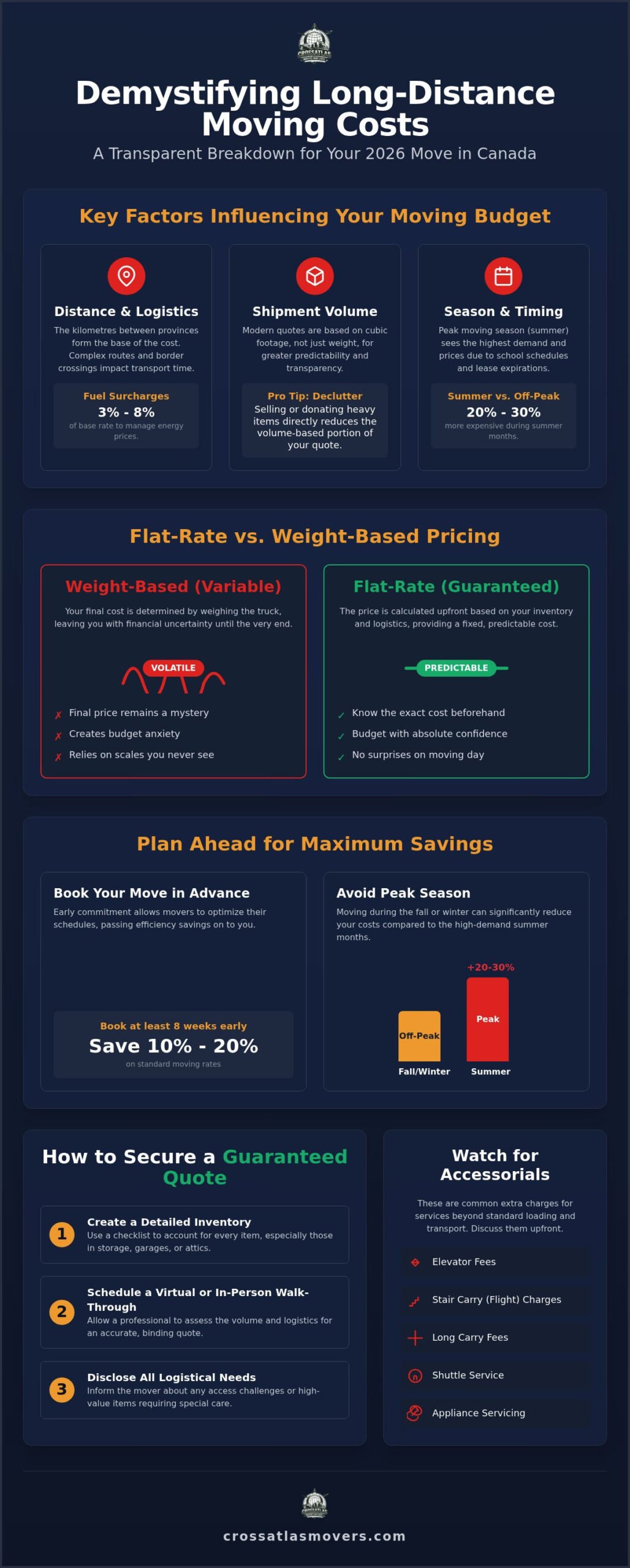
The distance between your origin and destination provinces is the most significant fixed factor in your estimate. Transporting goods across thousands of kilometres requires navigating complex highway routes and multiple provincial borders, which impacts total transport time. In 2026, fuel surcharges remain a critical component of pricing, typically ranging between 3% and 8% of the base rate. These surcharges help providers manage volatile energy prices while maintaining the reliability of their own fleet. Logistics experts also consider “empty backhauls” when calculating costs. If a truck can be scheduled to carry a different shipment on its return trip, the increased efficiency can sometimes lead to more competitive pricing for the initial client.
Seasonality and Timing Your Move
The calendar often dictates the price as much as the distance. Data from 2026 indicates that summer moves can cost 20% to 30% more than relocations scheduled for the fall or winter months. This seasonal price hike is driven by peak demand as families prioritize moving before the school year begins. Demand also spikes significantly during the final days of each month when most lease agreements expire. To secure the most predictable budget, aim to book your 2026 move at least 8 weeks in advance. This early commitment can lead to a 10% to 20% reduction in rates, as it allows the mover to organize their schedule with greater precision and efficiency.
Calculating the Core Costs: Distance, Volume, and Weight
When you look at a breakdown of long distance moving costs Canada, you’ll see that the industry is moving away from traditional weight-based scaling. Traditionally, a truck was weighed at a government-certified scale before and after loading. This “scaling” method often left families anxious, as the final price remained a mystery until the truck was on the highway. In 2026, many reputable providers, including members of the Canadian Association of Movers, are shifting toward volume-based estimates. This approach measures the cubic footage your belongings occupy, offering a more visual and predictable way to understand your expenses.
The core of your budget is built on how much space you take up in the trailer. Modern logistics companies use precise digital tools to convert your furniture list into cubic feet. This allows for a more transparent conversation about what you’re bringing. You can realize immediate savings by decluttering before the inventory process begins. Selling or donating heavy furniture that won’t fit your new home’s aesthetic isn’t just a lifestyle choice; it’s a direct way to reduce the volume-based portion of your quote.
Inventory Accuracy and its Impact
A precise inventory is the only way to avoid mid-move price adjustments. We recommend a detailed virtual or in-person walk-through where every room is assessed by a professional. It’s easy to overlook items tucked away in a garage or attic, but these “forgotten items” can quickly trigger surcharges if they require additional space or labour. Using a cross country moving checklist helps you organize your inventory room by room. When you provide a complete picture of your household, you eliminate the risk of the mover needing to adjust the price on loading day because the shipment was larger than anticipated.
Weight-Based vs. Volume-Based Estimating
Paying by the pound can be volatile because you can’t easily verify the weight of your sofa or dining table. Volume-based estimating is different. It relies on the physical dimensions of your goods, which stay the same regardless of how heavy they are. While some legacy movers still use weight, CrossAtlas prefers a clear inventory-based flat-rate model. This methodical approach ensures that your price is locked in based on a confirmed list of items. You’ll have the security of knowing your total cost before the truck even arrives. If you’re ready to move away from guesswork, you can request a transparent quote that reflects the actual space your belongings require.
Avoiding the ‘Hidden Fee’ Trap: Accessorial Charges Explained
A transparent breakdown of long distance moving costs Canada must account for more than just the space on a truck. Accessorial charges are fees for additional services or logistical hurdles that fall outside the standard loading and transport. While these aren’t inherently “hidden,” they can feel like a trap if your mover doesn’t disclose them during the initial consultation. Integrity in the industry relies on a clear Bill of Lading, which serves as your legal contract. This document should outline every potential fee before the first box is lifted, ensuring you aren’t surprised by the final invoice.
Physical obstacles at your origin or destination are the most common triggers for these fees. If a large tractor-trailer cannot safely navigate a narrow residential street or park close to your door, a shuttle service fee is applied. This involves transferring your goods to a smaller truck for the final leg of the journey. Because CrossAtlas operates its own fleet, we have greater control over these logistical transitions. This ownership ensures that shuttle services are handled with the same precision as the main haul, keeping your belongings safe and your costs as predictable as possible.
Common Surcharges to Watch For
Long carry fees apply if the distance from the truck’s parking spot to your front door exceeds a specific threshold, typically 75 feet. These are calculated based on the extra labour required to move items over that distance. Waiting time is another factor to consider. If the destination residence isn’t ready for offloading at the scheduled time, movers may charge an hourly rate for the idle crew. Methodical experts will always discuss these variables with you during the quoting stage. Identifying these potential surcharges early allows you to organize your arrival and parking permits to avoid unnecessary expenses.
Valuation and Insurance Options
Basic liability coverage in Canada is legally set at $0.60 per pound per article. This “released value” is often insufficient for high-value items like electronics or antiques. Full-value protection offers a higher level of security but comes at an additional cost. You should also check if your existing home insurance policy provides any coverage for goods in transit. Utilizing specialized packing services for long distance moving can often reduce your liability risks. Professional crating ensures items are secured to industry standards, which lowers the likelihood of a claim and provides a smoother transition for your most precious belongings.
Flat-Rate vs. Variable Pricing: Which Model Saves You More?
Selecting the correct pricing structure is the most critical step when analyzing a breakdown of long distance moving costs Canada. Most interprovincial relocations are quoted using either a flat-rate or a variable weight-based model. While a variable estimate might appear lower at first glance, it often introduces unnecessary financial risk. Flat-rate pricing removes this burden by providing a fixed cost based on the specific volume of your inventory. This methodical approach allows you to plan your 2026 budget with absolute precision and peace of mind.
The primary risk of variable pricing is the “weight-plus” trap. Under this model, the final price is only determined after the truck is weighed at a government scale. If your belongings are heavier than the salesperson estimated, your bill increases instantly. In Canada, non-binding estimates can legally be exceeded by 10% of the original quote, with the additional amount often due immediately upon delivery. Choosing a flat-rate model shifts that risk away from the homeowner and onto the mover, ensuring a more relaxed transition without the fear of a hostage-load situation.
The Flat-Rate Advantage
A CrossAtlas flat-rate contract is designed for total transparency. It includes all essential transport costs, current fuel surcharges, and the professional labour required for loading and unloading. We provide these stable quotes because we own and operate our own fleet of trucks. This vertical integration means we don’t rely on third-party contractors who might add their own margins or change their rates unexpectedly. Families moving across provinces prefer this approach because it protects them from weight discrepancies and logistical delays. It’s about providing the security of a “no surprises” agreement that respects your financial boundaries.
Understanding Variable Van Line Pricing
Variable pricing is often the standard for large van lines that operate through a vast network of independent agents. These companies use weight certificates and complex industry tariffs to calculate the final cost. This system can be particularly challenging for corporate relocations or families on a strict timeline where every dollar must be accounted for in advance. If the inventory is slightly off, the price fluctuates, leading to potential “sticker shock” on moving day. When you evaluate the differences between long distance movers vs van lines canada, you’ll find that price stability is the hallmark of a specialized independent mover. If you’re ready to bypass the guesswork of weight scales, you can secure a flat-rate quote that remains consistent from the first box to the last.
How to Get a Guaranteed Moving Quote with No Surprises
Securing a guaranteed price for your relocation requires a methodical approach to documentation and inventory. When you request a breakdown of long distance moving costs Canada, the accuracy of your final contract depends entirely on the quality of information provided during the initial consultation. A comprehensive online quote request is the first step toward budget certainty. By detailing every item, from the sectional sofa to the contents of your storage locker, you allow the mover to calculate the exact volume requirements for your 2026 relocation with precision.
High-value or fragile items require specific attention during the quoting stage. Items such as fine art, electronics, or antique furniture should be listed explicitly to ensure they receive the appropriate crating and handling. Professional packing plays a significant role in securing a fixed price. When a mover handles the packing, they can offer a more robust guarantee on the total cost because they have full control over the volume and safety of the goods. This reduces the variables that often lead to mid-move adjustments, ensuring that the price you are quoted is the price you pay on delivery day.
The Quote Request Process
To receive an accurate interprovincial estimate, you’ll need to provide your origin and destination addresses, desired moving dates, and a complete inventory. Organizing your inventory by room before starting the process leads to a faster and more precise response. While digital tools are helpful for gathering initial data, talking to a relocation specialist directly provides an added layer of security. These experts can identify logistical challenges, such as tight parking or specific elevator restrictions, that might otherwise be overlooked in a standard online form. This direct communication builds a foundation of trust and ensures every detail is accounted for before the truck arrives.
Finalizing Your Relocation Agreement
Once you receive your flat-rate quote, review the terms and conditions with care. It’s essential to understand the interprovincial moving regulations that govern your rights as a consumer in Canada. Your agreement should clearly state the guaranteed delivery date and the loading schedule to help you coordinate your personal travel plans. Finalizing your 2026 relocation plan with CrossAtlas Movers means moving from the uncertainty of estimates to the reliability of a fixed contract. This final step transforms a high-stress life event into a well-organized logistical operation, managed by professionals who prioritize the safety of your belongings and the transparency of your bill.
Secure Your 2026 Relocation with Financial Certainty
A successful interprovincial move depends on moving away from the uncertainty of weight-based estimates. By understanding the breakdown of long distance moving costs Canada, you can identify legitimate accessorial charges and avoid the common pitfalls of variable pricing. We’ve explored how precise inventory management and professional packing transform a complex logistical challenge into a predictable, manageable expense. When you prioritize transparency, you protect your budget from the risks of unexpected surcharges or weight discrepancies.
At CrossAtlas Movers, we bring the accountability of a family-owned and operated business to every shipment. Because we manage a dedicated fleet of company-owned trucks, we provide guaranteed delivery dates and flat-rate quotes that remain firm. You don’t have to navigate this transition alone; our methodical experts are here to ensure your belongings arrive safely and on schedule. Get Your Free Flat-Rate Long Distance Moving Quote from CrossAtlas Movers and take the first step toward a stress-free transition. Your new beginning deserves a foundation of trust and transparency. We’re ready to help you move forward with confidence.
Frequently Asked Questions
How much does it cost to move a 3-bedroom house across Canada?
According to industry data from July 2026, a full-service move for a two-bedroom home costs between $4,000 and $6,000, while larger homes with four or more bedrooms range from $7,000 to $12,000. A three-bedroom house typically falls between these benchmarks depending on the total volume of goods. Obtaining a breakdown of long distance moving costs Canada is the most reliable way to determine your specific requirements based on your unique inventory.
Is it cheaper to hire movers or rent a truck for a long-distance move?
Renting a truck often appears more affordable initially, but the total cost of a DIY move includes fuel, provincial road tolls, hotels, and insurance. When you factor in the physical labour and the risk of damage, professional services often provide better overall value. Full-service moves include transport and loading, which eliminates the hidden expenses of a self-drive trip. This methodical approach ensures your transition is safe and stays within a predictable budget.
What are the most common hidden fees in the Canadian moving industry?
Common “hidden” costs are usually legitimate accessorial charges that were omitted from the initial estimate. These include fees for navigating stairs, using elevators, or “long carries” where the truck cannot park near the entrance. Identifying a breakdown of long distance moving costs Canada helps you spot these variables upfront. A professional flat-rate quote should disclose these factors to ensure you aren’t surprised by the final bill on delivery day.
How do fuel surcharges affect my moving quote in 2026?
Fuel surcharges are a standard industry practice used to manage the volatility of energy prices during long-haul transport. In 2026, these surcharges typically range from 3% to 8% of the base transport rate. This percentage is added to the quote to cover the actual cost of diesel for the journey. Reputable movers who operate their own fleet will clearly outline this surcharge in your contract to maintain total financial transparency and budget certainty.
Does my home insurance cover my belongings during an interprovincial move?
Most standard home insurance policies provide limited coverage for goods while they are in transit. You should contact your provider to verify if your specific policy applies to an interprovincial move. By law, Canadian movers must provide basic liability coverage of $0.60 per pound per article. However, this is often insufficient for high-value items, so many families choose full-value protection or specialized professional packing to ensure their possessions are fully secured.
What is the difference between a binding and a non-binding moving estimate?
A binding estimate, often called a flat-rate quote, is a guaranteed price based on a fixed inventory. A non-binding estimate is only a projection of the final cost. In Canada, a non-binding estimate can legally be exceeded by up to 10% of the original amount, with the balance due shortly after delivery. Choosing a binding agreement provides the most security, as it protects you from unexpected price hikes caused by weight discrepancies.
How much should I tip long-distance movers in Canada?
Tipping is not mandatory, but it is a common way to show appreciation for a job well done. Most industry professionals suggest a tip of 5% to 10% of the total move cost, divided among the crew. Alternatively, some families provide a flat amount of $20 to $50 per mover for each day of loading and unloading. Providing refreshments or a meal is also a thoughtful gesture that supports the crew during a long day.
How far in advance should I book my cross-country move?
You should aim to book your relocation at least 6 to 8 weeks in advance. Industry reports from June 2026 show that early booking can lead to a 10% to 20% reduction in rates. Securing your dates early ensures that your preferred mover is available and allows them to organize the logistics of their fleet more efficiently. This lead time is especially critical if you’re planning to move during the peak summer season.